Style
with
intention.
The art of interior styling in Delhi NCR is about creating homes that feel considered without feeling over-designed. The right combination of furniture, colour, texture, lighting, artwork and personal objects can transform an ordinary room into a distinctive living environment.

A beautiful room is not just decorated. It is carefully edited.
Interior styling brings together the final visual and functional layers of a home. It creates balance between architecture, furniture, materials and the objects that express the personality of the people who live there.
Four rules for a polished Delhi NCR home.
Great styling is usually less about adding more and more about choosing the right elements and giving them enough room to breathe.
Style with restraint.
Select fewer decorative objects and give important pieces enough visual space to make an impression.
Mix textures.
Combine wood, stone, linen, wool, metal, glass and upholstery to introduce depth without relying on excessive decoration.
Consider scale.
Large furniture needs appropriately scaled artwork, rugs and lighting. Proportion is one of the foundations of sophisticated styling.
Let the home tell a story.
Books, artwork, photographs, crafts and collected objects make an interior feel personal rather than copied from a showroom.
Elegant ways to style a modern home.
These interior styling ideas work across apartments, builder floors, villas and independent homes in Delhi, Gurgaon, Noida and the wider Delhi NCR region.

Create a strong living room focal point.
Build the room around one visual anchor such as artwork, a sculptural coffee table, a fireplace, a feature wall or an elegant media unit.

Layer different textures.
Pair smooth surfaces with tactile materials such as linen, wool, wood, stone, boucle-style upholstery or woven accents to create depth.

Style the bedroom for calm.
Use soft bedding, restrained artwork, warm bedside lighting, curtains and natural textures to create a peaceful private retreat.

Use artwork as a design anchor.
One large artwork can often create more impact than a wall crowded with small decorative pieces. Choose art that connects with the room’s palette.

Make the dining table a styled centre.
A sculptural centrepiece, candles, ceramics or a simple floral arrangement can give the dining room a finished appearance without creating clutter.

Give the entrance a deliberate look.
Combine a slim console, mirror, artwork, lighting and one or two carefully selected objects to make the entrance feel complete.

Build around a restrained colour palette.
Warm whites, beige, taupe, natural wood and muted greens can create a calm foundation, while darker or richer accents add visual depth.

Make storage part of the styling.
Closed storage keeps visual noise under control, while selected open shelves can display books, ceramics, art and personal collections.

Bring natural elements indoors.
Plants, branches and natural materials add life, softness and colour to contemporary interiors while breaking up hard architectural surfaces.

Layer the lighting.
Combine ambient, task and accent lighting instead of relying on one ceiling fixture. Warm light can make materials and textiles feel richer.
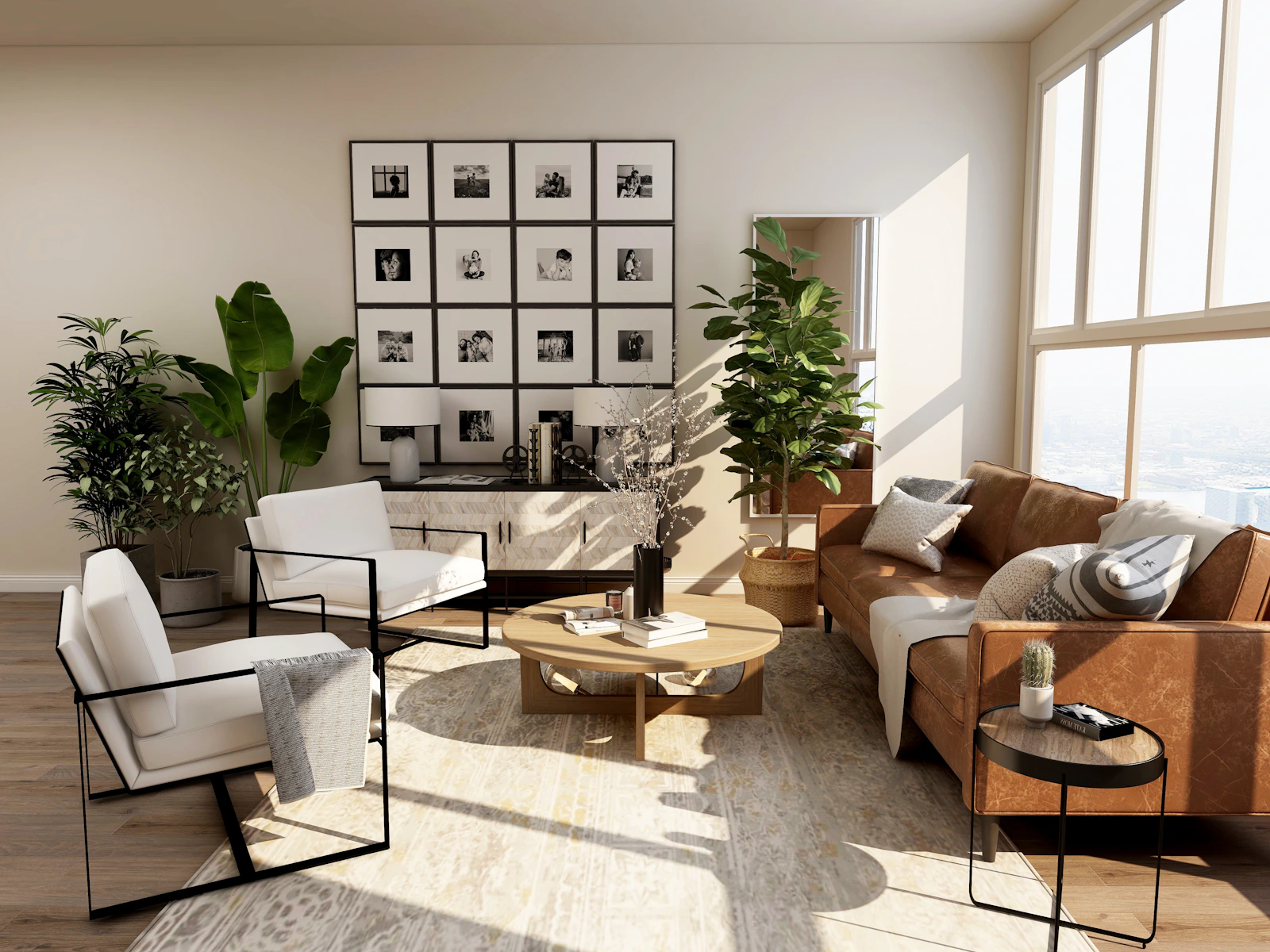
Add objects that mean something.
Travel finds, family photographs, books, handmade objects and collected art can make a styled home feel authentic and individual.

The most elegant interiors know when to stop.
Good interior styling is an exercise in editing. Every object does not need to be displayed, and every wall does not need a feature.
Start with the architecture and larger furniture. Then introduce rugs, curtains, lighting and artwork before adding smaller decorative objects.
This layered approach creates depth while preserving the calm and functionality required for everyday living.
PLAN YOUR HOMEThe Art of Interior Styling in Delhi NCR
Interior styling in Delhi NCR is about more than selecting attractive furniture or decorative accessories. It is the process of creating visual relationships between architecture, furniture, colour, lighting, materials, artwork and personal belongings.
A well-styled home should feel comfortable first and beautiful second. In Delhi, Gurgaon and Noida, where homes range from compact apartments to expansive villas and builder floors, successful styling also needs to respond to space, natural light, storage and everyday routines.
What is interior styling?
Interior styling is the final composition of a room. Interior design establishes the layout, functionality, materials and architecture, while styling adds the visual layers that make the space feel finished.
These layers can include cushions, rugs, curtains, artwork, plants, books, decorative objects, mirrors, lighting and carefully selected furniture.
Why interior styling matters in Delhi NCR homes
Homes across Delhi NCR often need to balance modern lifestyles with limited floor area, substantial storage requirements and a desire for sophisticated aesthetics. Styling can help bring these practical and visual requirements together.
Current design discussions increasingly favour warmer, more personalised interiors rather than spaces that feel overly sterile or purely trend-driven. Natural materials, layered textures, personal objects and functional design are all useful tools for achieving this balance. :contentReference[oaicite:0]{index=0}
Start with the architecture
Before adding decorative objects, look at the room itself. Note the windows, doors, ceiling height, flooring, built-in cabinetry and architectural focal points.
Styling should support these features rather than compete with them. A beautiful architectural element often needs only restrained furniture and lighting to become the centre of attention.
Choose a clear colour story
Colour is one of the fastest ways to create cohesion. Instead of selecting every item independently, establish a base palette and then introduce one or two accent tones.
Warm neutrals, natural wood, earthy colours and muted greens are especially adaptable for contemporary homes. Richer colours can then be introduced through artwork, cushions, rugs or occasional furniture.
The important point is consistency. The same accent colour can appear in several small locations so that the room feels intentionally composed.
Use texture to create depth
A room using only one material or finish can appear flat. Texture introduces visual and tactile variation without requiring many colours.
- Natural or engineered wood.
- Stone and textured surfaces.
- Linen and cotton fabrics.
- Wool or textured rugs.
- Metal accents.
- Glass and reflective surfaces.
- Indoor greenery.
The aim is not to use every texture available. A smaller number of contrasting materials usually produces a more sophisticated result.
Style the living room around one focal point
The living room is usually the largest social space in the home, so it benefits from a clear visual hierarchy.
A large artwork, sculptural coffee table, statement lighting fixture, fireplace, feature wall or carefully designed TV unit can become the primary focal point.
Designers often recommend varying textures, grouping accessories deliberately and using greenery or a statement object to give a living room a finished appearance. :contentReference[oaicite:1]{index=1}
Interior styling for small apartments
Small homes require editing. Too many decorative objects can make an apartment feel smaller and more crowded.
- Choose furniture that matches the room’s scale.
- Use vertical storage wherever practical.
- Keep major surfaces visually simple.
- Use mirrors strategically.
- Prefer multifunctional furniture.
- Use curtains that visually increase ceiling height.
- Keep decorative groupings compact and intentional.
The role of artwork in interior styling
Artwork provides personality and can establish the colour direction of a room. Instead of treating art as an afterthought, use it as part of the overall composition.
A large artwork above a sofa, bed or console can create a strong focal point. Smaller pieces can work well when grouped with enough negative space around them.
How to style a coffee table
Coffee tables are often one of the most visible surfaces in a living room. A simple composition might include a tray, a few books, a sculptural object and a small plant or floral arrangement.
Varying height and shape creates visual interest. At the same time, leave enough clear surface for everyday use.
Interior styling with books and personal objects
Books are particularly useful styling elements because they provide colour, height and personality. Display books selectively on coffee tables, shelves and consoles.
Personal objects are equally important. Family photographs, travel pieces, handmade objects and inherited furniture can make a home feel collected rather than commercially staged.
Layered lighting for a sophisticated home
Lighting should be considered in layers. Ambient lighting provides general illumination, task lighting supports activities, and accent lighting highlights artwork, shelving, architecture or decorative elements.
Warm lighting can make wood, stone, fabrics and neutral colours appear richer, particularly during the evening.
Curtains and window styling
Window treatments have a major influence on the perceived height and softness of a room. Floor-to-ceiling curtains can visually elongate the walls and create a more finished appearance.
Use sheer curtains where daylight is important and layer them with heavier curtains where privacy and light control are required.
Bring greenery into the interior
Plants introduce organic shape and colour into rooms dominated by straight architectural lines. A large plant can fill an empty corner, while smaller plants can soften shelves and consoles.
Natural materials and greenery are also increasingly used to create calmer residential environments in urban homes. :contentReference[oaicite:2]{index=2}
Styling bedrooms for comfort
Bedroom styling should prioritise rest and comfort. Begin with the bed, then layer bedding, cushions, bedside lighting, curtains and artwork.
Avoid filling every surface. A restrained composition can make the bedroom feel more spacious and relaxing.
Dining room styling ideas
The dining table should remain functional, but a carefully chosen centrepiece can establish the mood of the room. Ceramics, flowers, candles or a sculptural object are simple options.
A pendant light positioned correctly above the table can act as both functional lighting and a strong design element.
Foyer styling in Delhi NCR homes
The foyer is the first interior moment guests experience. Even a compact entrance can feel considered with a slim console, mirror, artwork, lighting and a small selection of decorative pieces.
In smaller apartments, avoid bulky furniture. A narrow console or wall-mounted shelf can provide function without reducing circulation space.
How to style shelves without creating clutter
Open shelving should be edited regularly. Instead of filling every compartment, create groups with different heights and leave some areas empty.
- Books arranged vertically and horizontally.
- Small artwork leaning against the wall.
- Ceramic or sculptural objects.
- Small plants.
- Objects with personal meaning.
Negative space is part of the composition. It allows important objects to stand out.
Modern interior styling in Gurgaon
Gurgaon homes often combine contemporary architecture with premium finishes and multifunctional requirements. Interior styling can soften the clean geometry of modern apartments and builder floors through textiles, artwork, natural materials and warm lighting.
Larger homes can accommodate statement furniture and artwork, while compact apartments benefit from restrained palettes and multifunctional pieces.
Interior styling in Noida
In Noida and Greater Noida, efficient styling can help apartments feel personalised without compromising storage or circulation.
Custom storage, coordinated furniture, wall artwork and carefully selected decorative pieces can establish a premium look while keeping the room practical.
Interior styling in Delhi
Delhi offers an especially broad design vocabulary. Contemporary interiors can incorporate handcrafted objects, traditional references, artwork and modern furniture without becoming visually disconnected.
A modern-traditional approach can be particularly effective when heritage-inspired objects are balanced with clean architectural lines and contemporary lighting. Current Delhi design guidance also highlights the appeal of combining local character with global influences. :contentReference[oaicite:3]{index=3}
Warm minimalism and layered interiors
A warmer interpretation of minimalism is increasingly relevant for residential interiors. Rather than removing every decorative element, the approach uses fewer but better-considered pieces, natural materials, tactile finishes and a softer palette.
Current 2026 design commentary similarly points toward personalised, lived-in spaces and combinations of natural materials and layered textures rather than overly sterile interiors. :contentReference[oaicite:4]{index=4}
Common interior styling mistakes
Even high-quality furniture and accessories can look disconnected if the composition is not planned.
- Using too many unrelated colours.
- Choosing furniture that is too large for the room.
- Putting small artwork on very large walls.
- Overloading shelves and tabletops.
- Using only one type of lighting.
- Matching every piece too perfectly.
- Ignoring curtains and rugs.
- Following trends without considering personal taste.
How to make a home look expensive through styling
A luxurious appearance does not necessarily require expensive decoration everywhere. Proportion, consistency, lighting and material quality often have a greater visual impact.
- Choose fewer, better-scaled furniture pieces.
- Use a cohesive colour palette.
- Invest in good curtains and rugs.
- Use warm layered lighting.
- Include natural materials.
- Frame artwork properly.
- Keep clutter hidden through organised storage.
- Add a few meaningful statement objects.
Interior styling for nuclear families
Styling for a family home should reflect how the space is actually used. Decorative objects should not interfere with children’s activities, entertaining or everyday storage.
Durable upholstery, washable textiles, concealed storage and flexible furniture can allow a home to remain elegant while still being practical.
Interior styling for multi-generational homes
Multi-generational homes need a balance between personal preferences and visual continuity. Different bedrooms can have individual personalities while shared spaces use a common material and colour language.
Comfortable seating, accessible storage, clear circulation and appropriate lighting should be considered alongside decorative styling.
A practical interior styling checklist
- Confirm the room’s primary function.
- Measure furniture before purchasing it.
- Select a base colour palette.
- Choose the main focal point.
- Layer lighting.
- Add rugs and window treatments.
- Introduce artwork.
- Layer natural and tactile materials.
- Add greenery where appropriate.
- Display meaningful objects.
- Remove unnecessary decorative items.
- Review the room from different viewpoints.
Final thoughts on interior styling in Delhi NCR
Interior styling in Delhi NCR is ultimately about creating a home that feels intentional, comfortable and personal. The most successful interiors do not depend on a single trend. They combine good proportions, useful furniture, thoughtful lighting, tactile materials and objects that have meaning.
Whether you are styling an apartment in Noida, a builder floor in Gurgaon or a family home in Delhi, start with the architecture and lifestyle. Build the larger composition first, then add smaller layers gradually.
The result should feel collected rather than crowded, sophisticated rather than excessive, and personal rather than copied.
Interior styling across Delhi, Gurgaon and Noida.
Each location brings its own combination of architecture, lifestyle and spatial requirements. The styling approach should respond to the home rather than follow a fixed formula.
Delhi
Blend contemporary furniture with artwork, natural materials, handcrafted accents and carefully selected decorative objects for sophisticated Delhi homes.
Gurgaon
Style modern apartments, premium builder floors and larger residences using warm lighting, refined furniture, layered textures and custom storage.
Noida
Create stylish and functional apartment interiors with space-conscious furniture, integrated storage, artwork, greenery and carefully controlled decorative layers.
Interior styling: FAQs.
What is interior styling?
Interior styling is the process of arranging furniture, colours, lighting, artwork, accessories, textiles and decorative elements so that a space feels cohesive, functional and visually balanced.
How can I style my home in Delhi NCR?
Start with the room’s layout and colour palette, then add appropriately scaled furniture, layered lighting, textiles, artwork, greenery and a limited selection of decorative accessories.
What are popular interior styling ideas in Delhi NCR?
Warm neutral palettes, natural materials, layered textures, statement lighting, customised furniture, greenery, artwork, multifunctional storage and personalised accessories are useful approaches for Delhi NCR homes.
How do I make a small apartment look stylish?
Use appropriately scaled furniture, multifunctional storage, mirrors, a restrained colour palette, floor-to-ceiling curtains and layered lighting while keeping decorative objects selectively edited.
Should every room have the same interior style?
Rooms do not need to look identical. A consistent colour palette, material language or design detail can connect different rooms while allowing each space to have its own personality.
Turn an empty room into a considered home.
Create an interior styling plan around your architecture, furniture, lifestyle, colour palette and personal collection.
Understanding Interior Styling
Interior styling is the art of enhancing the aesthetic appeal of a space through various decorative elements. It combines color, texture, and furniture placement to create a cohesive and inviting atmosphere. This practice is especially significant in bustling urban areas like Delhi NCR, where diverse living spaces demand unique styling approaches.
The Importance of Personalized Styles
In Delhi NCR, personal taste heavily influences interior styling. Many homeowners opt for themes that resonate with their culture and lifestyle. From modern minimalism to traditional Indian aesthetics, the choices are endless. Engaging a professional interior stylist can help in transforming your vision into reality, ensuring that each space reflects your personal flair.
Popular Trends in Delhi NCR Interior Styling
Current trends in Delhi NCR highlight the fusion of functionality and style. Open spaces, sustainable materials, and vibrant color palettes are becoming increasingly popular. Utilizing local craftsmen’s work in furniture and décor also supports local economies while adding a unique touch to homes. Emphasizing natural light and greenery is another trend that enhances both health and the ambiance of interiors.