


Looking high-end on a budget is not about spending more—it’s about where and how you spend. Luxury interiors rely on restraint, proportion, and detail, not expensive materials everywhere. With the right strategies, even a modest budget can deliver a premium, designer feel.
Here’s a practical, proven guide to make your home look expensive without overspending.
1. Stick to a Neutral, Cohesive Colour Palette
High-end interiors almost always use limited, calm colour schemes.
Best budget-friendly luxury colours:
- Whites, off-whites, beige
- Greige, taupe, soft grey
- One accent colour maximum
Avoid:
- Too many colours in one space
- Loud contrasts on multiple walls
A restrained palette instantly elevates the space.
2. Invest in Lighting (This Is Non-Negotiable)
Lighting is one of the biggest luxury indicators—and it doesn’t have to be expensive.
Budget-friendly upgrades:
- Warm white lighting (3000K)
- Simple pendant or chandelier in living/dining
- Wall sconces or picture lights
- Cove lighting only in key areas
Good lighting > expensive furniture.
3. Choose Fewer, Bigger Furniture Pieces
High-end spaces feel uncluttered.
Instead of:
- Many small furniture items
Do this:
- One well-proportioned sofa
- One solid dining table
- Clean, simple TV unit
Fewer pieces = more visual luxury.
4. Use Full-Height Elements Wherever Possible
Vertical lines create an upscale look.
Where to apply:
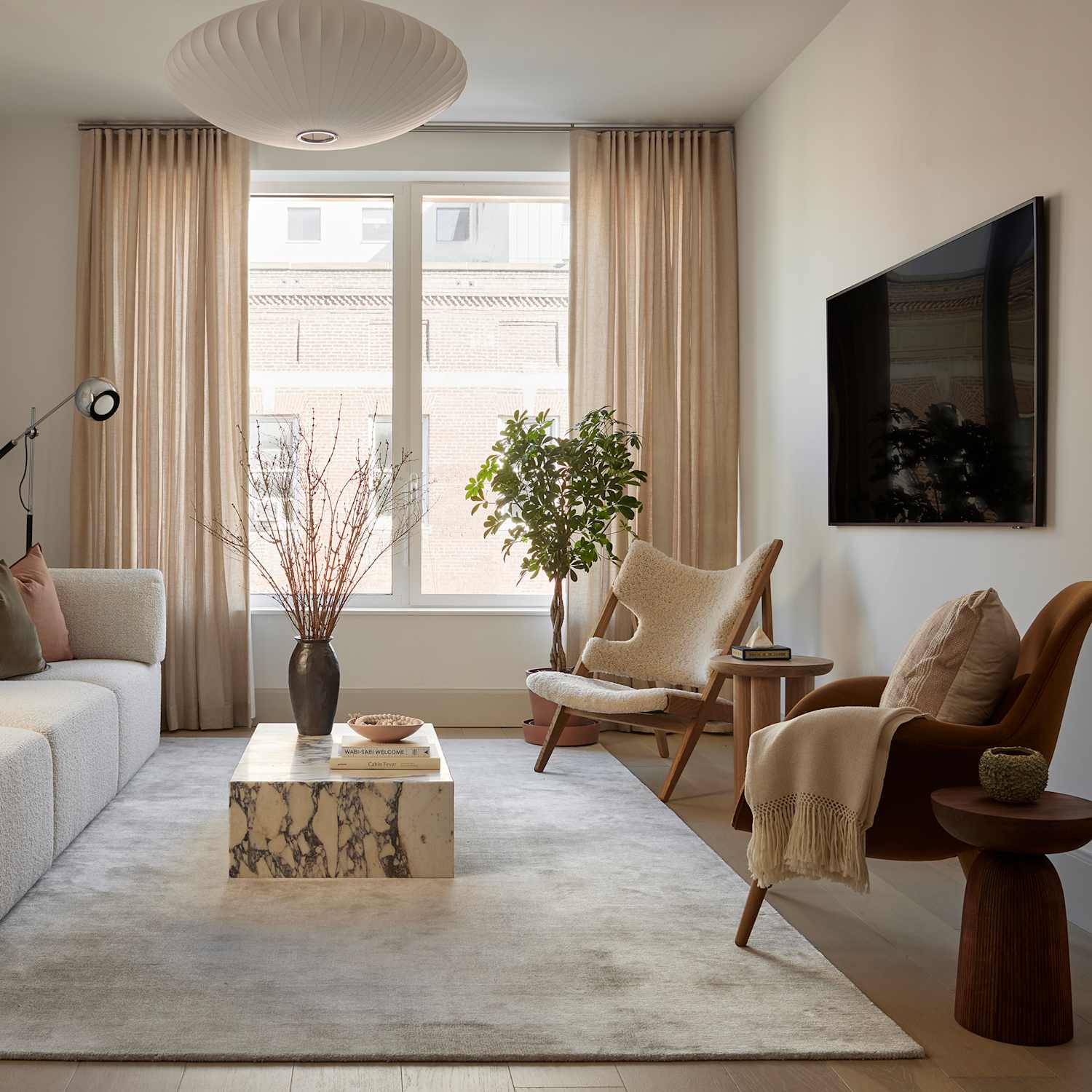
- Floor-to-ceiling curtains
- Full-height wardrobes
- Tall mirrors
- Wall panelling only on one feature wall
Height creates drama without extra cost.
5. Mix Textures, Not Materials
Luxury comes from layering, not expensive finishes.
Budget-friendly texture ideas:
- Linen or cotton curtains
- Matte finishes instead of gloss everywhere
- Cane, fluted glass, ribbed laminates
- Rugs to add softness
Avoid matching everything. Contrast feels premium.
6. Keep Hardware Minimal and Consistent
Cheap-looking homes often fail here.
Upgrade these instead:
- Cabinet handles (simple, matte black/brushed brass)
- Door hardware
- Switch plates (clean, minimal designs)
Small changes → big visual upgrade.
7. Style Like a Designer (Not Like a Store)
Styling makes or breaks the look.
High-end styling rules:
- Odd numbers (3 objects instead of 2 or 4)
- Empty space is intentional
- One statement object per surface
- Use books, trays, and greenery sparingly
Less styling = more luxury.
8. Focus on One Statement Element Per Room
Luxury interiors always have a focal point.
Examples:
- Statement light in living room
- Upholstered headboard in bedroom
- Textured wall behind TV
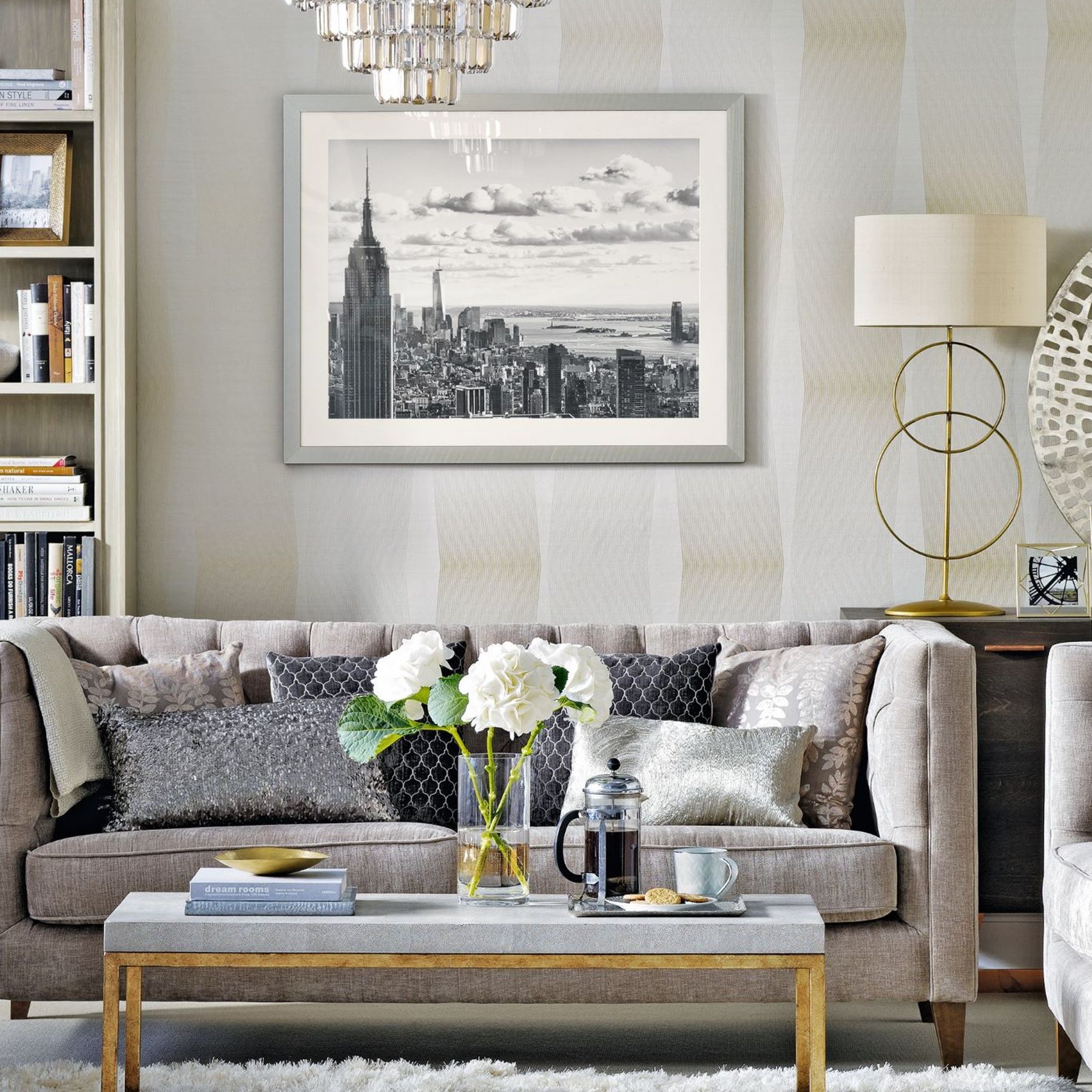
- Large artwork instead of many small frames
Don’t try to make everything stand out.
9. Use Curtains, Rugs, and Cushions Strategically
Soft furnishings are budget-friendly luxury tools.
Upgrade tips:
- Curtains that touch the floor
- Rugs larger than furniture footprint
- Cushions in neutral tones with texture
They add depth without heavy spend.
10. Avoid Over-Customization
Custom everywhere = expensive + cluttered.
Instead:
- Custom only where needed (wardrobes, kitchen)
- Ready-made furniture elsewhere
- Modular solutions with clean designs
High-end homes feel effortless, not overdesigned.
What NOT to Do if You Want a High-End Look
- Too many colours or patterns
- Overloaded false ceilings
- Shiny finishes everywhere
- Matching furniture sets
- Filling every wall and corner
Luxury = restraint.
Budget Allocation Rule (Smart Formula)
If your interior budget is limited:
- 40% → Kitchen & storage
- 20% → Lighting & finishes
- 20% → Furniture
- 10% → Soft furnishings
- 10% → Contingency
Spend where it shows the most.
Final Takeaway
To look high-end on a budget, focus on:
- Simplicity over excess
- Lighting over décor
- Proportion over quantity
- Consistency over variety
Luxury is a design mindset, not a price tag.
If you want, tell me:
- Your room (living / bedroom / full home)
- Approx budget
- Style preference
I can suggest exact budget-friendly upgrades to make your space look premium.